
workshop Task Objective: Website Setup
To successfully configure the domain provided by the university and to deploy a temporary placeholder website onto this live domain.
My Objective (Self-Initiated Work)
To develop the front-end structure for a personal portfolio website using foundational HTML, CSS and JavaScript.
Reflections on the First Code Batch
Initially, the task of building a personal portfolio from scratch using HTML, CSS and JavaScript did not feel too overwhelming. My background in Electrical Engineering did cover some basic coding.
So, I decided to challenge myself by choosing a non-conventional, neo-brutalist aesthetic for my website. It is known for its aggressive visuals, high-contrast typography and unpolished layouts.
The biggest challenge was definitely managing the sheer amount of custom CSS required to achieve that look. Every shadow, every border, had to be meticulously defined.
While the aesthetic can draw the attention of people, I must admit, it can conflict with WCAG 2.2 guidelines, increasing cognitive load for users with visual or motor impairments.
Moreover, brutalism has a history in Britain. Following the Second World War, Britain faced significant infrastructural and fiscal adversity, characterized by a severely depleted Treasury and widespread urban destruction resulting from the Blitz.
In the immediate post-1945, a new generation of architects sought a built environment that, in their view, more authentically reflected and addressed the social imperatives of contemporary post-war life.
The emergence of Brutalism is primarily contextualized as a British architectural phenomenon. It was propelled by a cohort of ambitious, post-war British architects who actively challenged the dominant, conservative public taste of the era. More broadly, the movement is understood not as an isolated trend, but as an almost inevitable ideological and formal evolution of the overarching Modern Movement, impacting not only architecture but also the fine arts, media, design, and political landscapes of the mid-20th century (Clement, 2018, Chapter 'Historical Context').
Digital portfolios are now a core assessment tool in project‑based learning, linking technical skill development with reflective practice and boosting learning effectiveness and ownership.
Leveraging technology, digital portfolios enable students to compile their work into multimedia-rich collections that are readily available and adaptable, unlike traditional paper formats. Furthermore, extensive research confirms that teachers and students appreciate the utility and importance of digital portfolios for evaluating progress and facilitating learning (Garcia, 2025).
Challenge: Understanding the underlying custom CSS needed for animations and complex shadows (like the dynamic preloader effect) is critical. I spent far too long tweaking a single 'box-shadow' property.
Another one of my main challenges was to overcome the unintentional gender bias I may imbue in my website design. Ambient belonging is a concept I came across while researching how to build inclusive website designs.
It refers to the sense of belonging people feel due to subtle cues in their environment, the layout of space or certain cultural elements in their surroundings (Cheryan et al, 2009, cited in, Anon, 2018, p.3).
Regarding aesthetic features such as symmetry, research claims that different genders comprehend web interfaces variedly (Tuch et al, 2010, cited in, Anon, 2018, p.4).
Bearing this in mind, I made sure my website was stimulating, complex, yet minimalistic enough to avoid visual overload on all kinds of viewers. I also went with a quirky frontpage because I believe it will help my website bring a sense of ambient belonging to its viewers. Since online interfaces are largely unidirectional, users tend to rely on empirical methods of evaluation for the websites, that may make them particularly sensitive to bias (Sundar, 2008, cited in, Anon, 2018).
Key Takeaway: I realized that so much goes into every website online. The bulk of website development effort resides in hidden tasks: browser testing and micro‑adjustments (e.g. box‑shadow fine‑tuning). This helped me realize the sheer amount of invisible labour that accrues behind-the-scenes.
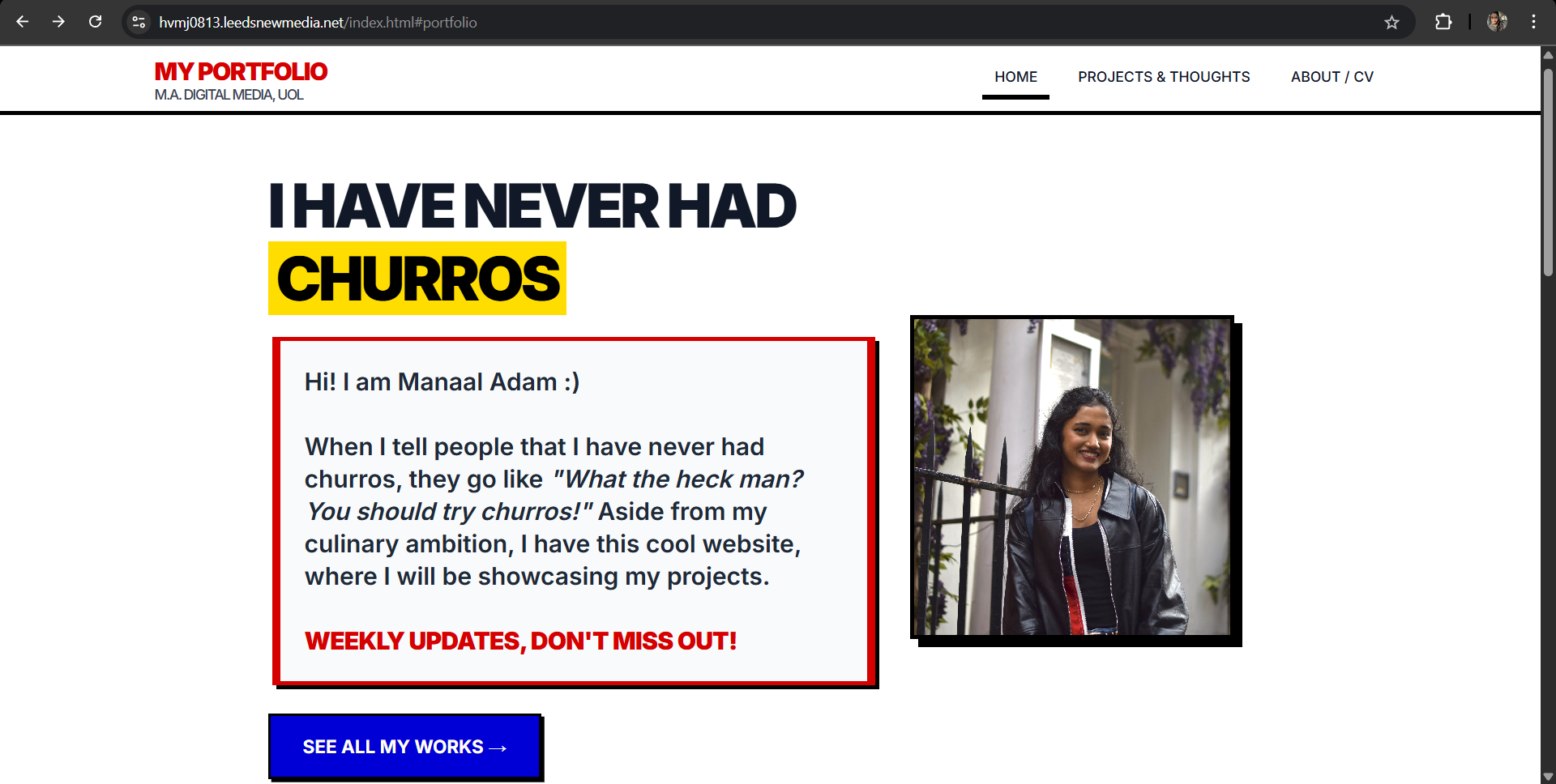
Figure 1.1: A snapshot of my frontpage. It's easy to tell that I have spent way too much time on the accented shadows for the text boxes. Despite the time invested, I was still unable to figure out how to align the image box with the introduction box. A detail that perhaps most would miss, but as a digital creator, this feels illegal.
Technical Triumphs
I'm particularly proud of implementing the churros preloader, especially making the animated shadows and the loading bar work smoothly. It helps to connect my frontpage to the rest of the subpages, building a continuous narrative.
The collapsible-content logic for the About section was important to make the frontpage more compact. This would make it seem less crowded and easy on the eyes.
I managed to create multiple subpages for each week's reflections, which made my website more interactive and engaging. This took me a while as I had to individually design each subpage and connect it to the main index ie. frontpage. I had to make sure that every button led to the right page and that there was always a button to go back to the previous page.
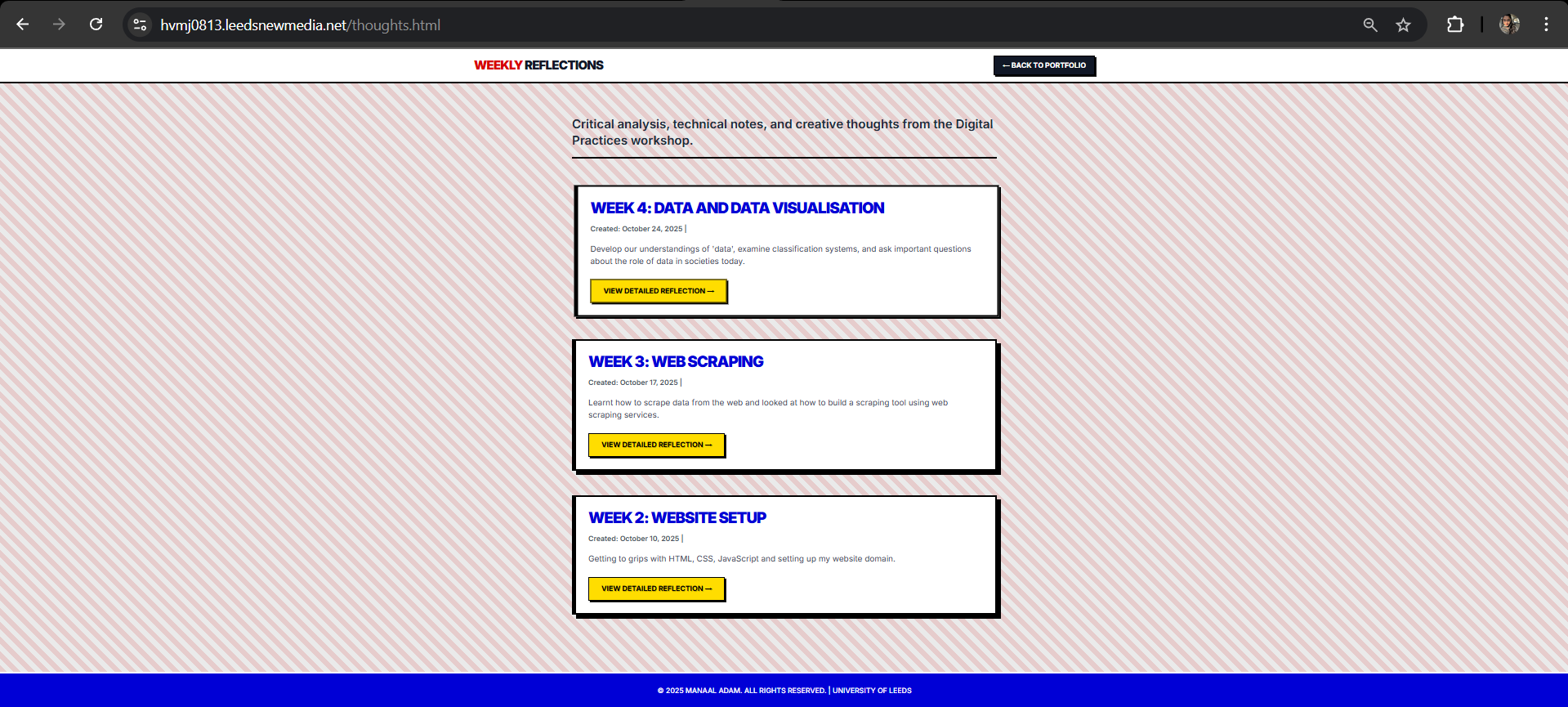
Figure 1.1: A snapshot of my weekly reflections page.
References
- Anon. 2018. Gender-Inclusive Design: Stereotypes and Bias in Web Interfaces. In: Conference Papers -- International Communication Association [Online]. Washington DC: International Communication Association, pp.1–16. [Accessed 22 November 2025]. Available from: https://search.ebscohost.com/login.aspx?direct=true&db=ufh&AN=135747746&site=ehost-live
- Clement, A. 2018. Historical context: Britain. In: Brutalism: Post-War British Architecture. [Online]. 2nd ed. Crowood Press. [Accessed 10 October 2025]. Available from: https://books.google.co.uk
- Garcia, M.B. 2025. Self-Coded Digital Portfolios as an Authentic Project-Based Learning Assessment in Computing Education: Evidence from a Web Design and Development Course. Education Sciences. 15(9).